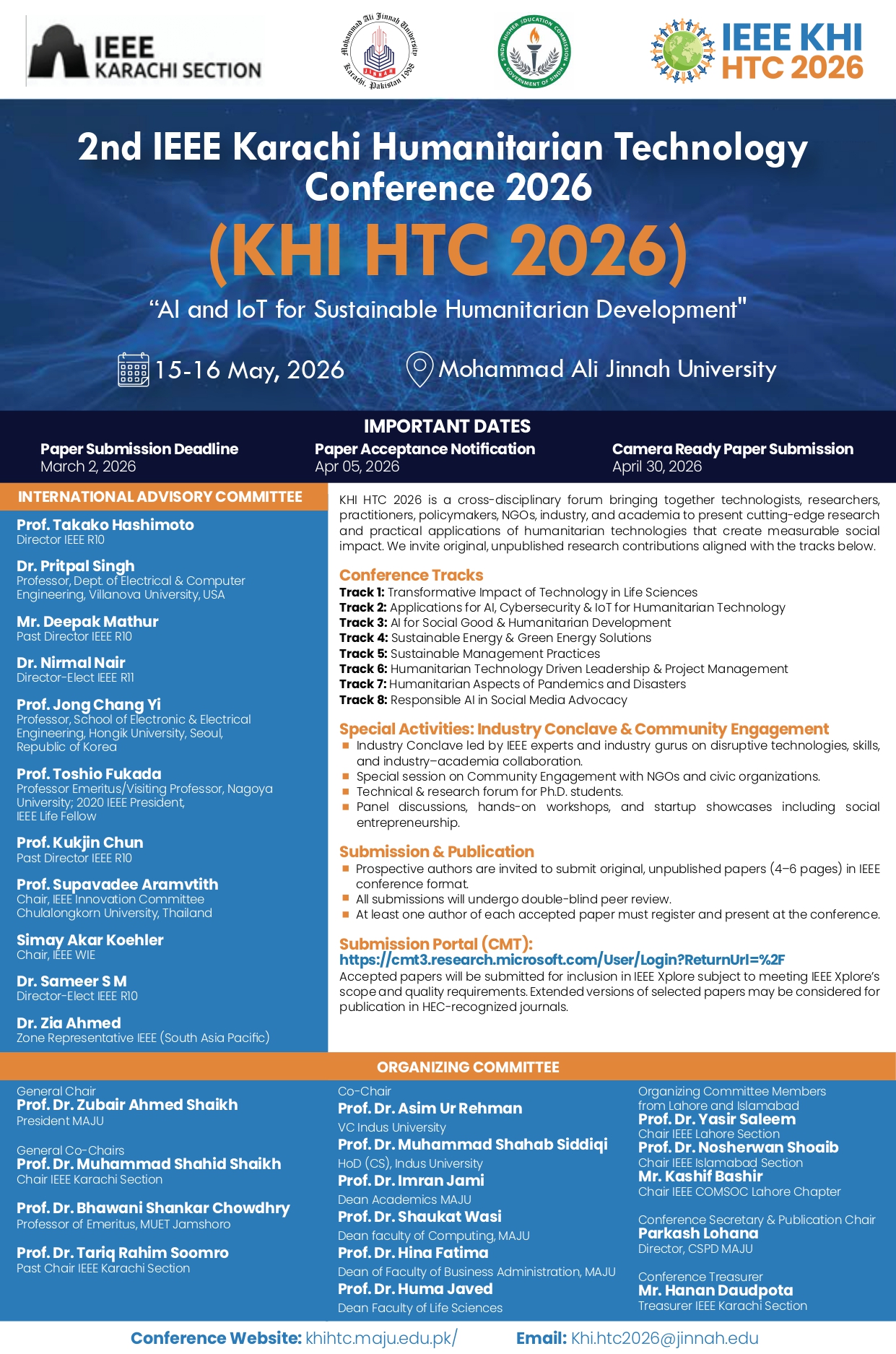
The 2nd IEEE Karachi Humanitarian Technology Conference 2026 aims to bring together researchers, technologists, innovators, policymakers, and humanitarian organizations to explore how Artificial Intelligence (AI) and the Internet of Things (IoT) can drive sustainable humanitarian development.
The 2026 edition focuses on translating technology innovation into real-world impact, particularly in underserved regions of Sindh and Baluchistan, through inclusive research, collaboration, and practical deployment.
A flagship 2nd IEEE Karachi HTC event focused on AI & IoT for humanitarian impact.
Main Theme: AI and IoT for Sustainable Humanitarian Development
Exploring how intelligent systems and connected devices can enable inclusive, resilient, and sustainable communities—especially in underserved and vulnerable regions.
Complete Structure of the conference
The conference will feature a blend of technical, professional, and interactive activities to engage diverse audiences.
From high‑level keynotes to hands‑on workshops and startup pitches, KHI‑HTC 2026 is designed to connect researchers, practitioners, and community stakeholders.
Keynotes by IEEE experts, UN representatives, NGO leaders, and industry innovators offering strategic perspectives on humanitarian technology.
Peer‑reviewed research papers showcasing novel AI and IoT solutions, with accepted work published in IEEE Xplore.
Multi‑stakeholder dialogues on policy, innovation, ethics, and field deployment in humanitarian contexts.
Practical sessions on AI/IoT prototyping, data ethics, and real‑world field applications for students and professionals.
A platform for humanitarian startups to showcase impact‑driven solutions and secure support from investors, donors, and mentors.
Workshops
workshops and an innovation pitch to help participants build real skills and scale impactful AI/IoT solutions for humanitarian challenges.
Focused technical sessions designed to equip participants with tools and methods they can directly apply in the field.
Empowering innovators to present impactful AI/IoT solutions for humanitarian challenges Winning teams receive .
“The Microsoft CMT service was used for managing the peer-reviewing process for this conference. This service was provided for free by Microsoft and they bore all expenses, including costs for Azure cloud services as well as for software development and support.”